Nuclear safety and radiation protection in the Netherlands
Ever since the first controlled use of nuclear technology, the need for a safe operating environment has been a priority. In the interests of operating nuclear facilities safely, the Dutch nuclear sector has traditionally placed great importance in engaging with international partners and sharing details of its experiences in this area.
The Dutch Nuclear Landscape
Despite its relatively small scale, the Dutch nuclear landscape is characterized by a diverse range of nuclear facilities. Each of these facilities work (or have worked) with fissile materials, to a greater or lesser extent.
The nuclear technology used has various applications, ranging from energy generation to medical diagnosis and treatment, and from scientific research to industrial use. With each of these applications, it is vital for the nuclear facilities concerned to guarantee nuclear safety.
The ANVS uses the State of Nuclear Safety and Radiation Protection to supplement its Unusual events report, which the Minister of Infrastructure and Water Management has annually disclosed to the House of Representatives in recent years. Future reports on the State of Nuclear Safety and Radiation Protection will also cover the safety situation with regard to other uses of radiation.
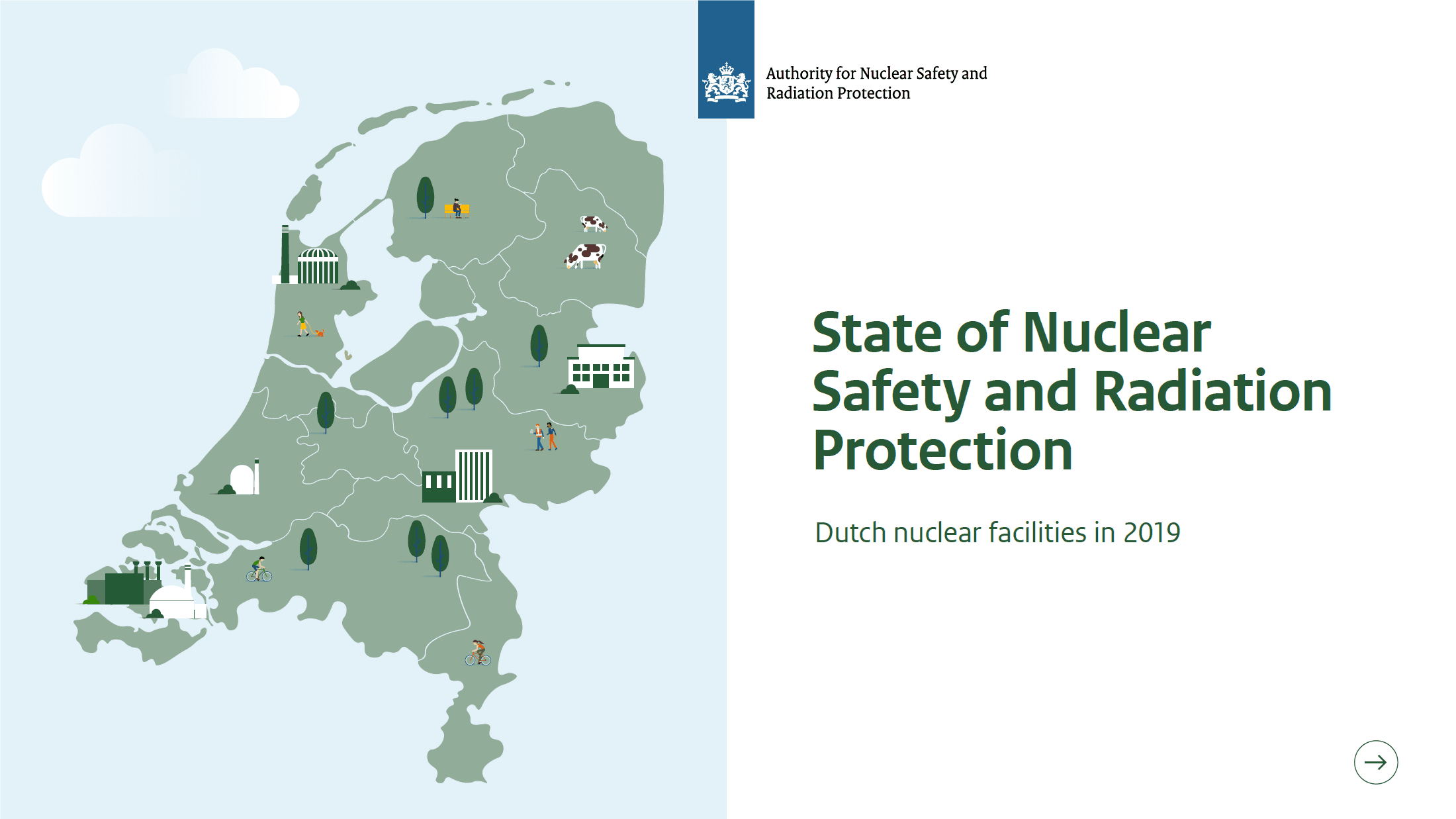
In the Netherlands, there are six sites that house nuclear facilities, which involve a range of applications
- High Flux Reactor and other facilities Petten
Research reactor, commissioned 1961, Licencees: Nuclear Research and Consultancy Group - Urenco, Almelo
Uranium enrichment facility, commissioned 1973, Licensee Urenco - Higher Education, Reactor Delft
Research reactor, commissioned 1963, Licensee: Reactor Institute Delft (RID) - Nuclear Powerplant, Dodewaard
commissioned 1969, shutdown 1997, licensee: Joint Nuclear Power Plant Nederland - COVRA, Nieuwdorp
Central Organisation for Radioactive Waste. Commissioned 1982, Licensee: COVRA - Nuclear Power Plant, Borssele
commissioned 1973, Licensee EPZ
- High Flux Reactor and other facilities Petten